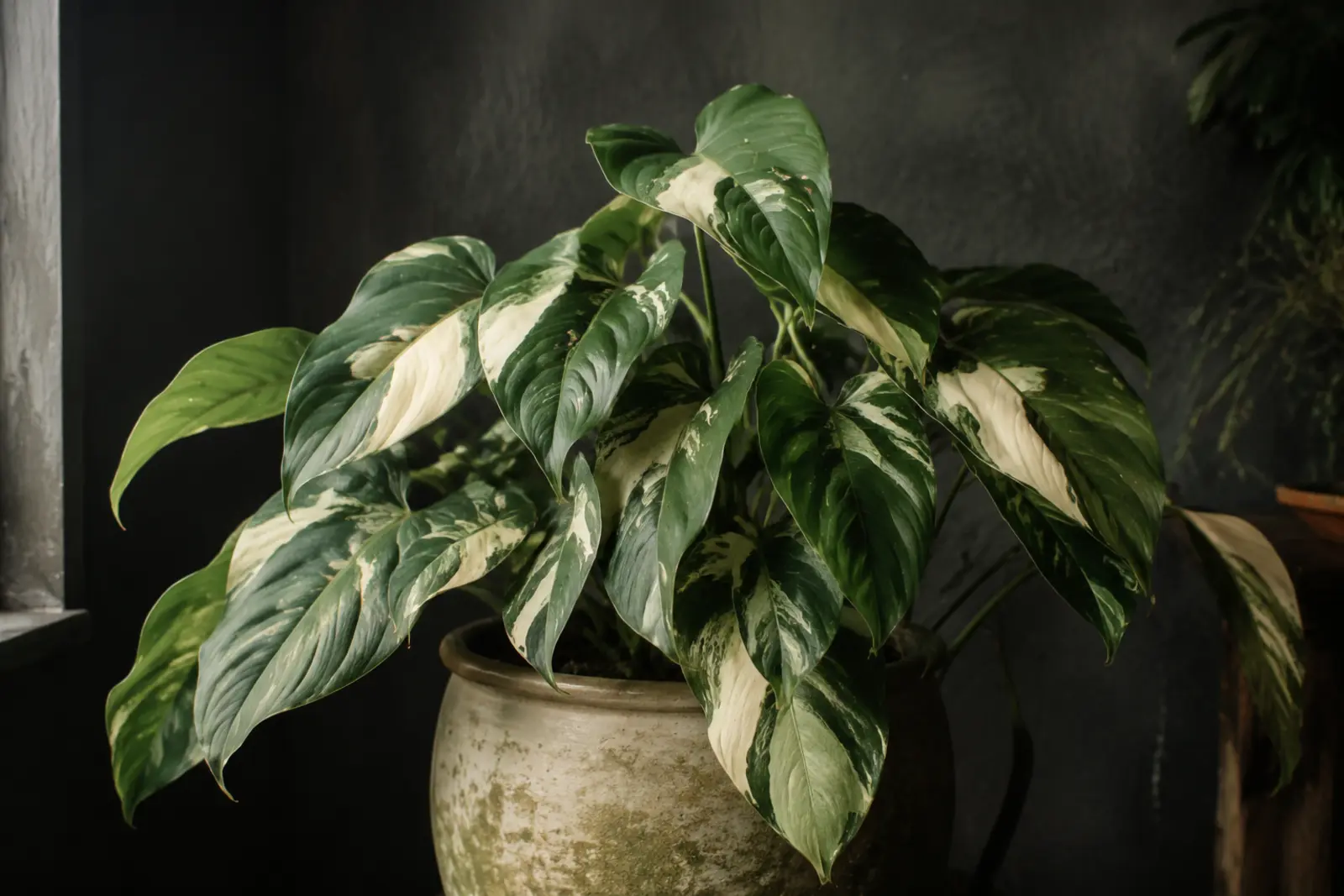
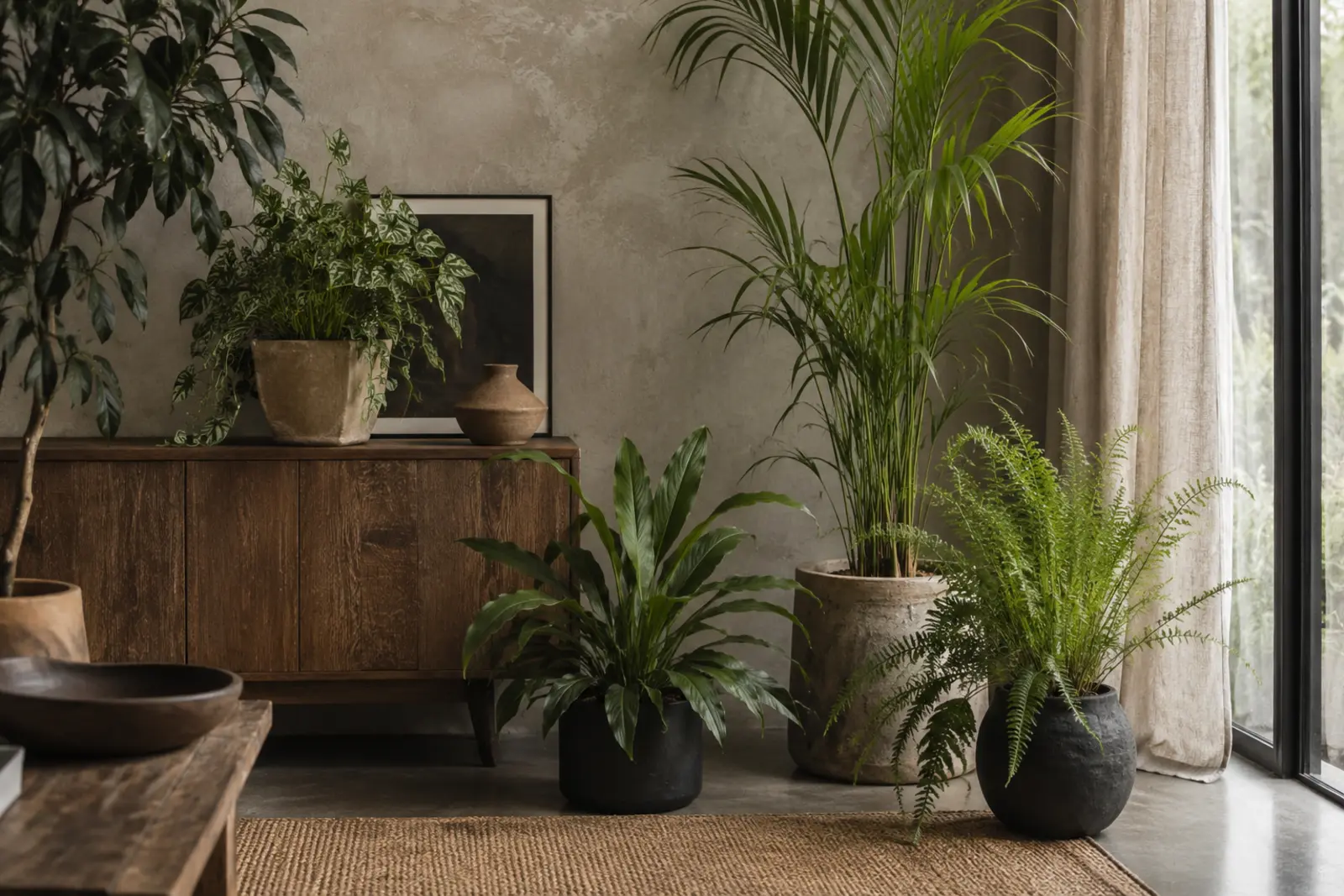
Small-batch thinking
Development can respond to materials, plant behavior, and what proves useful instead of forcing a permanent lineup.
Objects for plant life
Rare Form develops plant-adjacent objects and botanical formulations in small batches, using practical tests and carefully chosen materials.
Pieces and formulations are released in small batches, so materials, versions, and availability may change.
What matters
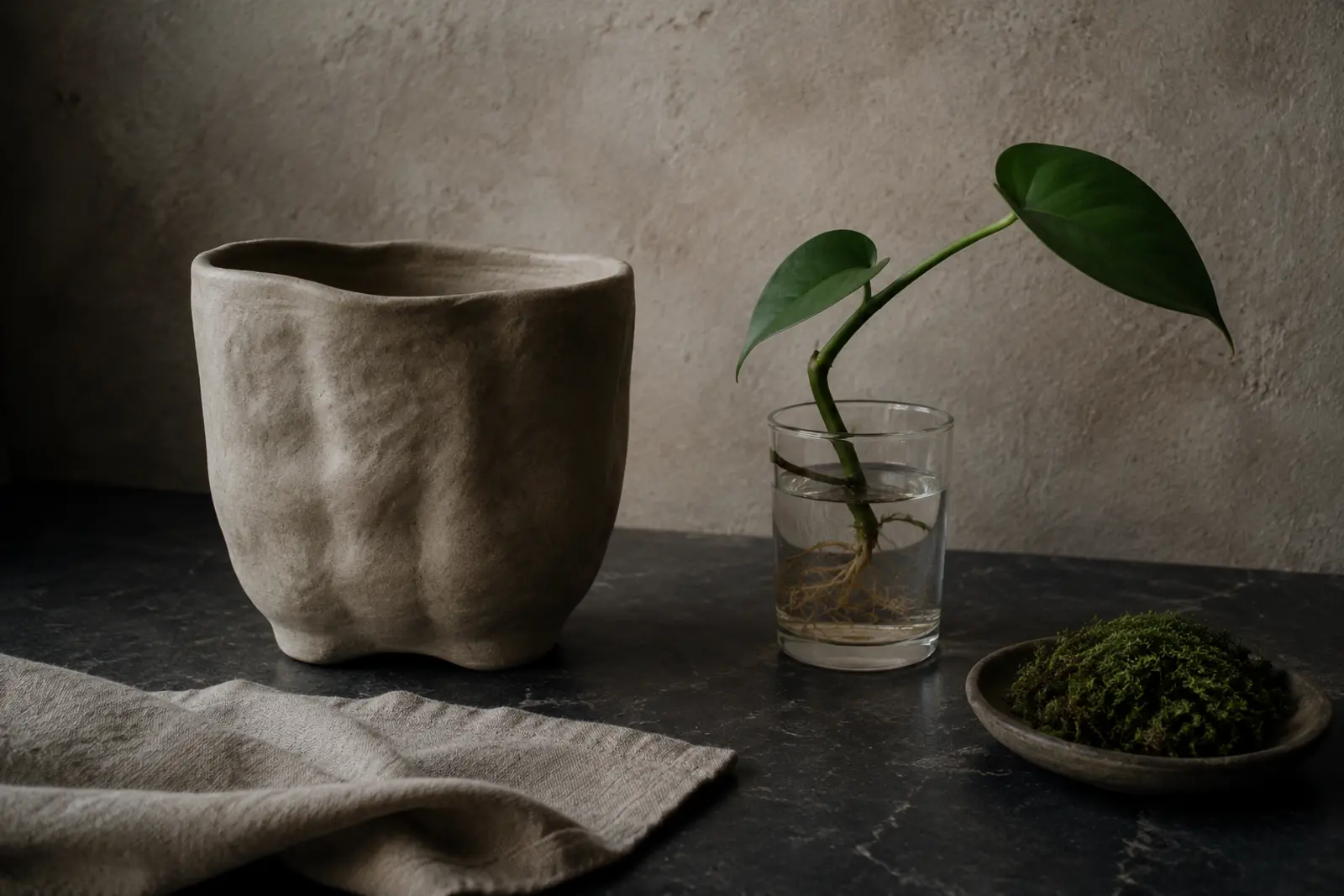
Plant care is full of repeated gestures: checking moisture, rotating a pot, cleaning a leaf, supporting a stem, propagating a cutting, or deciding where an object should live. Rare Form’s plant-adjacent work begins with those real routines rather than with decoration alone.
That process can produce practical objects, experimental forms, or botanical formulations. The common thread is attention to how plants, materials, and people share a space. Current listings show what has moved from experiment into availability; the studio story explains why the work is intentionally allowed to evolve.
Key points
Development can respond to materials, plant behavior, and what proves useful instead of forcing a permanent lineup.
An object can solve a practical plant-care problem while still contributing texture, proportion, and character to a room.
Early forms can lead to refinements, new versions, or entirely different directions as they are used and observed.
The starting point
A useful object often begins with a small friction: a tool that never has a home, a propagation that needs support, a pot and surface that do not work together, or a care material that is unpleasant to use. Looking closely at that moment creates a more grounded brief than beginning with style alone.
The visual side still matters. Plants bring irregular shapes, changing silhouettes, and strong texture into a room. The object beside them can echo that character, create contrast, or quietly recede. Use and form should support each other.
Changing availability
Small-batch work does not always move on a retail calendar. A material may become unavailable, a design may need another round, or a formulation may be intentionally held back while it is observed. That flexibility protects the quality of the idea and makes room for better versions.
For visitors, the practical consequence is simple: use Marketplace for current listings and contact Rare Form when the work shown here suggests a collaboration or custom direction. A past object can describe the studio’s vocabulary without promising that the exact piece is still for sale.
Custom questions
The most useful custom inquiry describes the plant, room, routine, and problem the object should address. Measurements, photographs, material preferences, and examples of what has not worked can be more valuable than asking for a duplicate of something made under different conditions.
Not every idea will fit the studio’s current capacity or direction, and some concepts require testing before a commitment makes sense. An inquiry is a way to identify that fit. It should establish the intended use, constraints, timing, and what level of variation is acceptable.
Next steps
Begin with the plant-care action, placement issue, or material question behind the object.
Consider moisture, weight, dimensions, maintenance, timing, and the surrounding space.
Small-batch work benefits from trials and revision before a form is repeated.
A finished piece may become available, evolve into another version, or return to development.
Best for
Questions & answers
Rare Form uses the phrase broadly for plant-adjacent pieces and formulations made for growing, care, display, propagation, or the atmosphere of plant life. Specific releases may vary.
Possibly, but a past piece may no longer be available or may have evolved. Send the reference and describe what interests you about it so current options can be discussed.
Custom or collaborative inquiries are welcome, but availability and fit are not guaranteed. Useful inquiries include the intended use, measurements, timing, and relevant photographs.
Facebook Marketplace is the most direct place to see active listings. Instagram and TikTok can also show ongoing experiments and studio work.
Contact Rare Form
Describe the use, setting, dimensions, materials, and timing. A good inquiry gives the studio enough information to decide whether the idea fits.