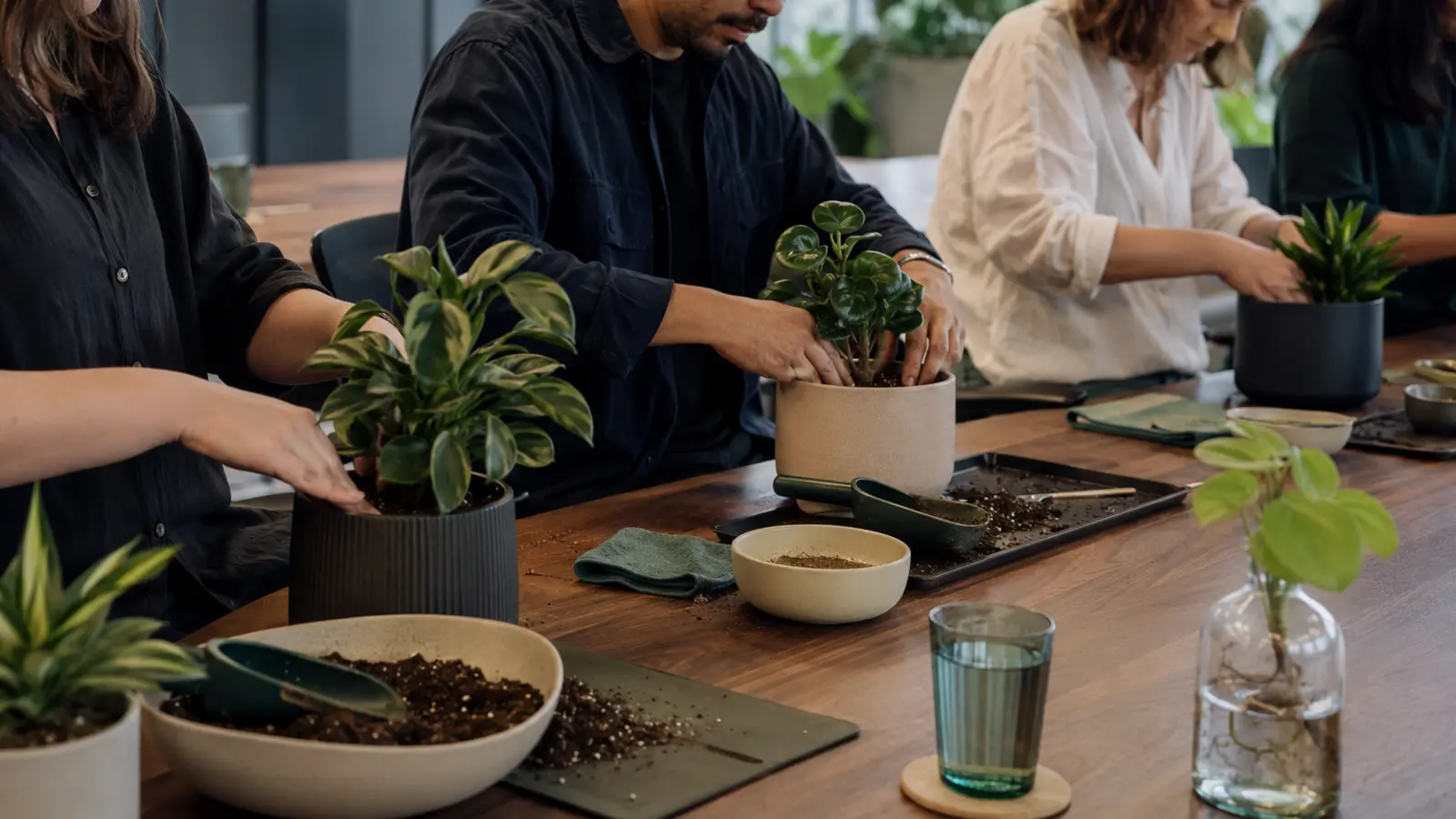
Social but structured
A shared project creates a rhythm for the gathering while leaving room for guests to talk and personalize their work.
Southeastern Pennsylvania parties & small groups
A private plant party gives guests a shared hands-on project with room for conversation, choice, and beginner-friendly learning.
The activity is planned around the group, venue, age range, time, materials, and agreed level of guidance.
What matters
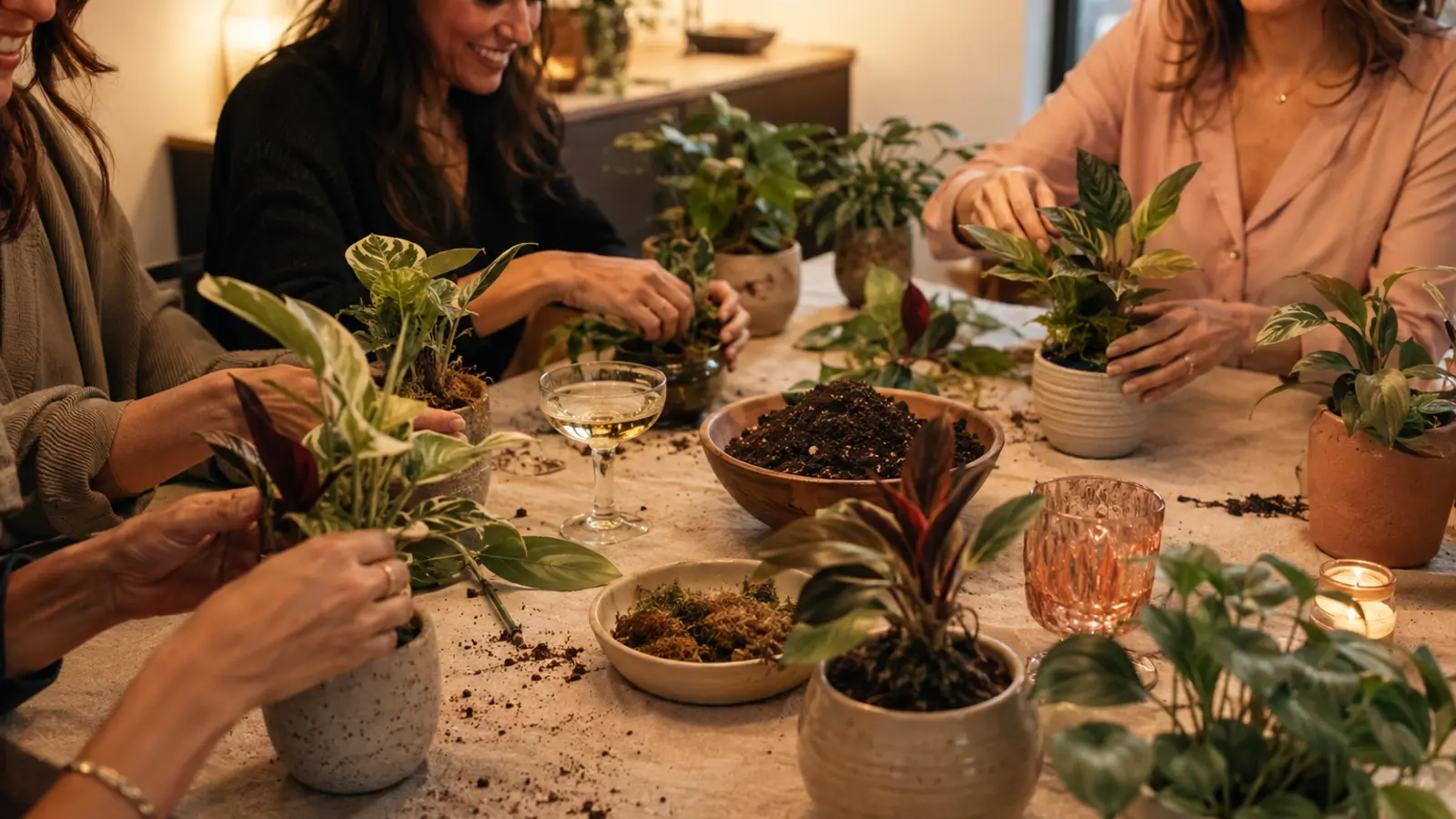
Plant-based gatherings work because the activity gives people an easy point of connection without demanding constant performance. Guests can talk while they choose, arrange, pot, and learn. The finished project also gives the event a natural ending and a meaningful take-home piece.
Rare Form can discuss private formats for birthdays, showers, home gatherings, friend groups, and other celebrations. The best plan starts with the people and setting: who is participating, how much time is available, what surfaces can be used, and whether the host wants a relaxed open format or a more guided workshop.
Key points
A shared project creates a rhythm for the gathering while leaving room for guests to talk and personalize their work.
The experience can focus on a few understandable care ideas instead of overwhelming people with plant terminology.
Project scale, pacing, materials, and instruction are discussed for the event rather than presented as a fixed package.
Choose the experience
A small adult gathering, mixed-age family party, shower, and children’s birthday do not need the same project or pacing. Include the approximate ages, group size, and desired atmosphere. Those details help avoid work that is too delicate, too long, or too complicated for the moment.
Visual choice can be part of the fun, but too many decisions can slow a group. A curated set of plants, vessels, or finishing details can give participants creative control while keeping the activity manageable. The final format depends on what is available and what the event can support.
Prepare the space
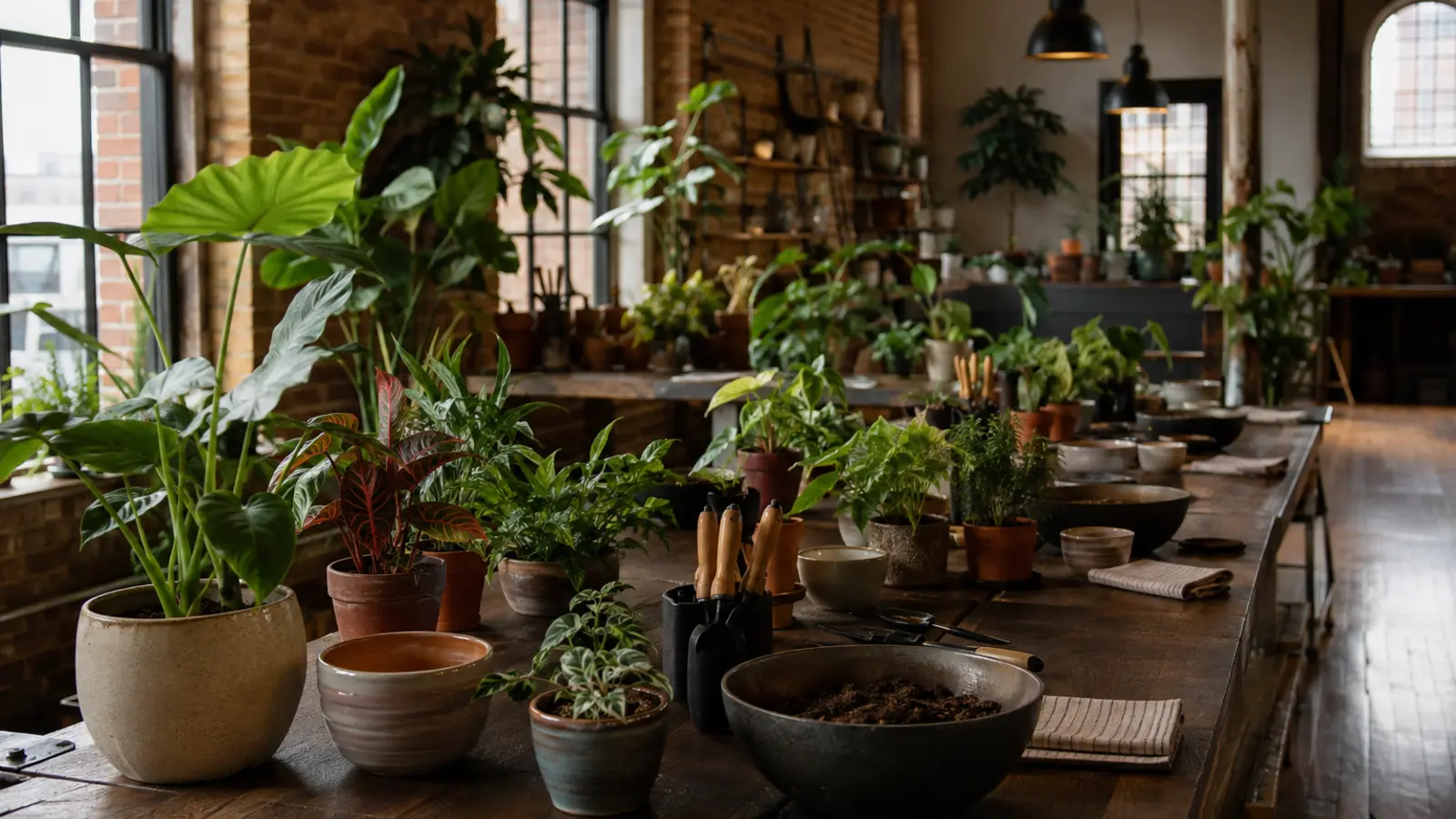
A potting activity needs stable tables, enough elbow room, and a surface that can be protected and cleaned. The host should identify where materials will be brought in, where completed projects will wait, and how guests will carry them home. A crowded food table is not a substitute for a dedicated work area.
For rented venues, confirm that soil, water, and plant materials are permitted. Home events should consider pets, small children, floor protection, and handwashing. A clear plan lets the workshop feel relaxed because the messy parts have already been anticipated.
Keep it growing
Guests do not need a lecture, but they should leave understanding the care decision most likely to determine success. That usually means light and watering. The plant can be introduced through a few observable cues: how to choose a placement, how to check the medium, and how to notice change without reacting too quickly.
Care guidance also helps the finished object feel personal rather than disposable. Participants can use the Rare Form care guides afterward, especially if the plant is new to them or their home conditions differ from the event space.
Next steps
Share the occasion, date, venue, ages, participant count, time available, and budget range.
Discuss an activity and level of choice appropriate to the group and current materials.
Agree on tables, access, protection, cleanup, timing, project scope, and final headcount.
Guests complete a guided plant project and leave with practical care direction.
Best for
Questions & answers
It may, depending on ages, group size, supervision, venue, and project. Include the age range and number of children in the inquiry so an appropriate direction can be discussed.
The intended format is usually a take-home project, but the exact plant, vessel, and materials depend on the agreed workshop plan.
Potentially, yes. The home needs a suitable work area, access for materials, and a cleanup plan. Share the location and photographs if the space has limitations.
Earlier is helpful, especially when the date is fixed or the group is larger. Availability and material lead time vary, so an inquiry does not reserve the date until details are confirmed.
Contact Rare Form
Share the occasion, date, venue, participant count, ages, time window, and budget range. That is enough to begin shaping the right questions.