Read the available light
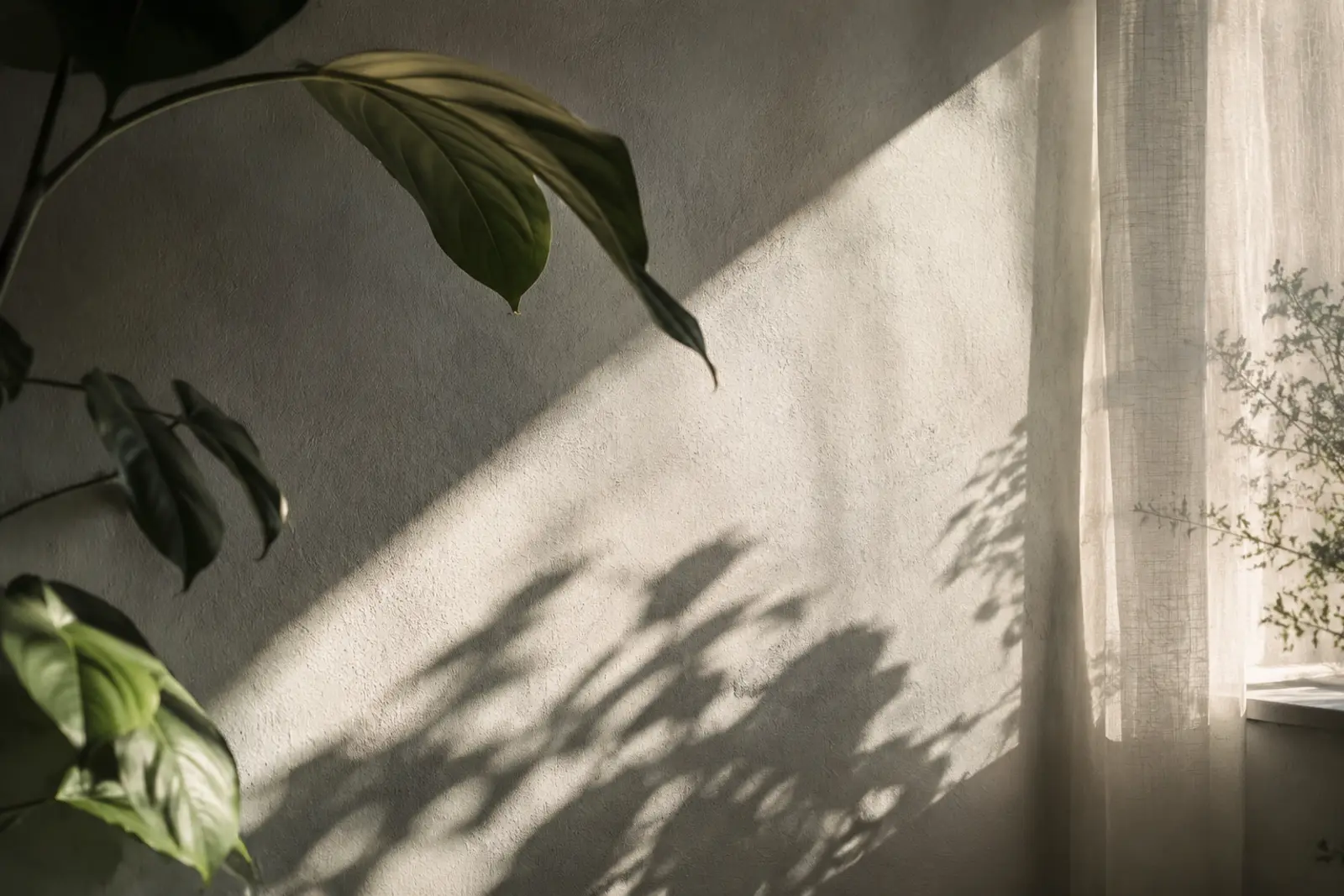
Window direction, distance, glass, coverings, overhangs, and seasons matter more than the words bright room.
Plant selection guide
A plant is more likely to work when its light, scale, growth habit, and care needs match the space before its appearance enters the decision.
Plant labels describe general preferences. Conditions inside a specific room determine how those preferences play out.
What matters
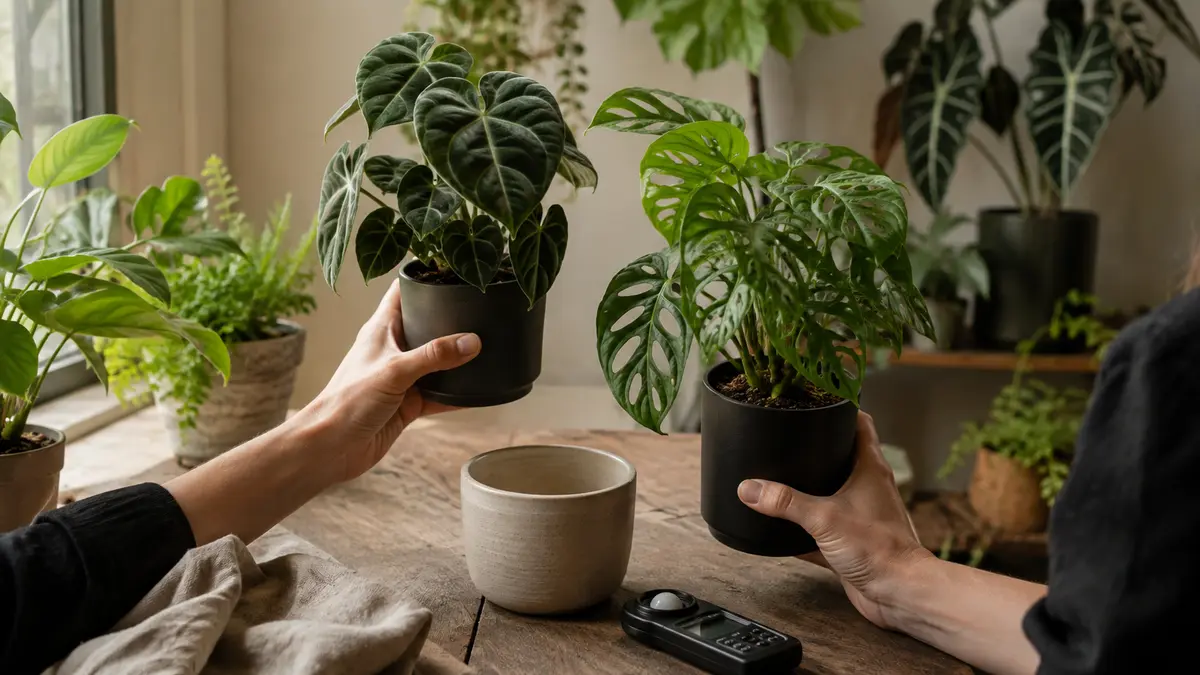
The most common plant-selection mistake is choosing a leaf and then searching for somewhere to put it. Reverse the process. Study the available location, decide what role a plant should play, and identify the level of care that can be sustained. That creates a useful shortlist instead of a cycle of beautiful mismatches.
No guide can reduce a living plant to a guaranteed formula. Windows change with seasons, buildings cast shadows, and care habits vary. The goal is not certainty; it is to make a better-informed choice and to notice when the conditions differ from what the plant needs.
Key points
Window direction, distance, glass, coverings, overhangs, and seasons matter more than the words bright room.
A compact nursery plant may eventually climb, trail, spread, or occupy far more floor space.
Watering access, travel, pets, and who is responsible belong in the selection brief.
Observe the location
Watch the proposed location in morning, midday, and late afternoon. Identify whether direct sun reaches the leaves and for how long. Measure distance from the window and note anything that filters the light. A light meter can add useful evidence, but repeated checks are already better than judging by how bright the room feels.
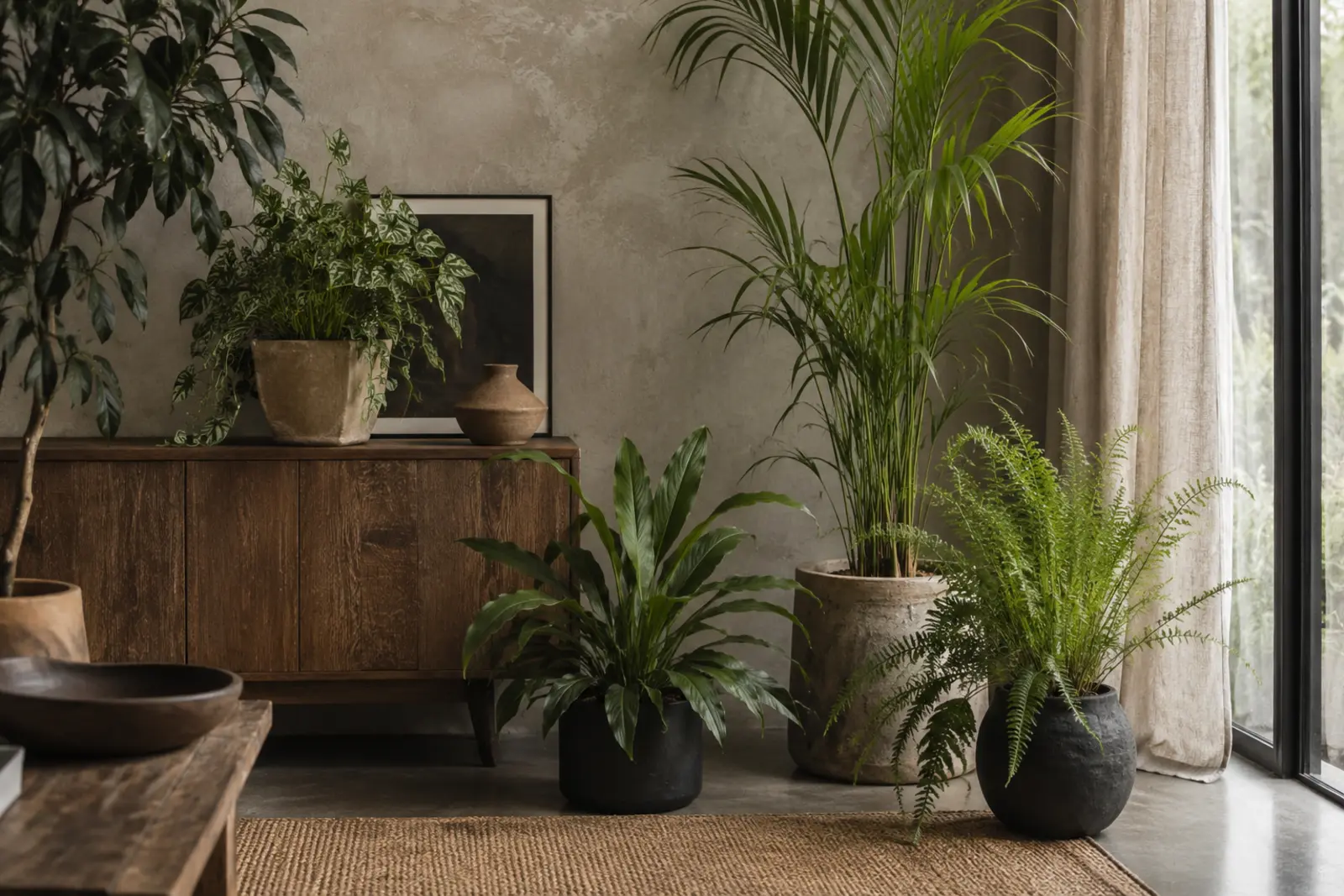
Look beyond light. Heating vents, exterior doors, cold glass, strong air conditioning, and crowded walkways can stress foliage or create constant damage. Shelves have height and weight limits. Hanging plants need secure support. Floor plants need room for people, doors, and cleaning equipment to move around them.
Define the role
A statement plant should have enough space and contrast to read as a focal point. A trailing plant needs a safe path for growth. A plant used to soften a hard corner needs the right mature volume. Thinking in terms of role makes plant form more important than a temporary nursery silhouette.
Consider whether the room benefits from one strong specimen, a repeated family of similar forms, or a layered group. More plants do not automatically create a better composition. Negative space shows the outline of foliage, makes care easier, and prevents a collection from reading as clutter.
Match the caretaker
Some plants tolerate drying more readily; others need closer moisture attention. Some recover from missed care; others show damage quickly. Be honest about travel, memory, access, and how often you enjoy checking plants. A plant that aligns with an existing routine can be more satisfying than one that constantly asks for a different person.
Pet and child safety also require species-specific research and thoughtful placement. Toxicity varies, and a high shelf is not always inaccessible to a climbing cat or a curious child. Use authoritative veterinary or poison-control information for safety decisions rather than relying on a general plant blog.
Rare Form recommends
Each product page explains why the item was selected, where it fits, where it does not, and what to check before following the affiliate link.
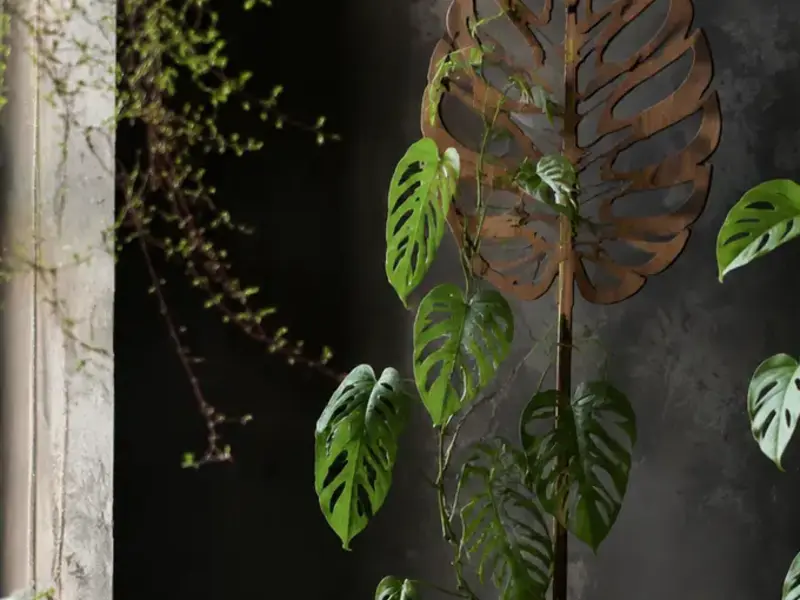
Treleaf
A leaf-shaped wooden trellis that gives smaller climbing and trailing houseplants a defined path without making the support look like utility hardware.
Why it made the shortlist
ROADPLUM
A set of stackable coco coir poles with ties for giving climbing houseplants vertical support that can be extended as new growth develops.
Why it made the shortlist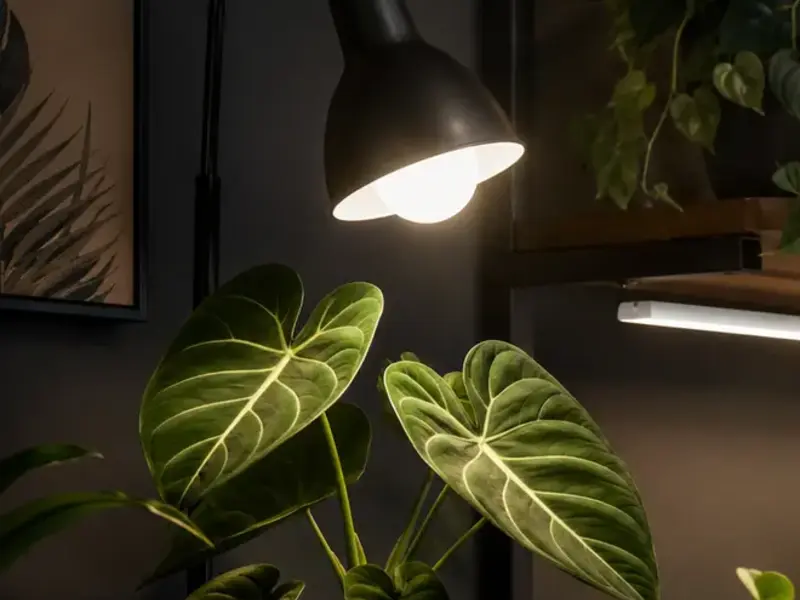
Briignite
White-appearing A19 LED grow bulbs with a standard E26 base, selected for adding plant light through an ordinary household-style fixture.
Why it made the shortlistNext steps
Capture the room and window at several times, not just a close-up of the empty corner.
Record light, dimensions, temperature issues, pets, access, and care preferences.
Decide whether the space needs height, softness, trailing movement, or one strong anchor.
Compare realistic mature form and care needs, then choose from what is healthy and available.
Best for
Questions & answers
There is no plant that needs no light. Some species tolerate lower light better, but growth usually slows and watering frequency changes. Measure or observe the proposed location and choose a tolerant plant rather than treating darkness as a plant condition.
That depends on window direction, glass, obstructions, season, and species. Light intensity often falls quickly with distance, so a location several feet away may be much darker than the window area appears.
A large plant creates immediate scale but costs more and may have a bigger acclimation challenge. A smaller plant adapts as it grows but takes time. The room, budget, desired effect, and available care should decide.
Yes. A plant styling inquiry can address a single statement area, a room, or a broader spatial plan. Include photographs, measurements, light, existing plants, and the desired atmosphere.
Contact Rare Form
Share photographs of the room and window, the proposed placement, dimensions, pets, and the care routine you can realistically offer.