Direction sets the pattern
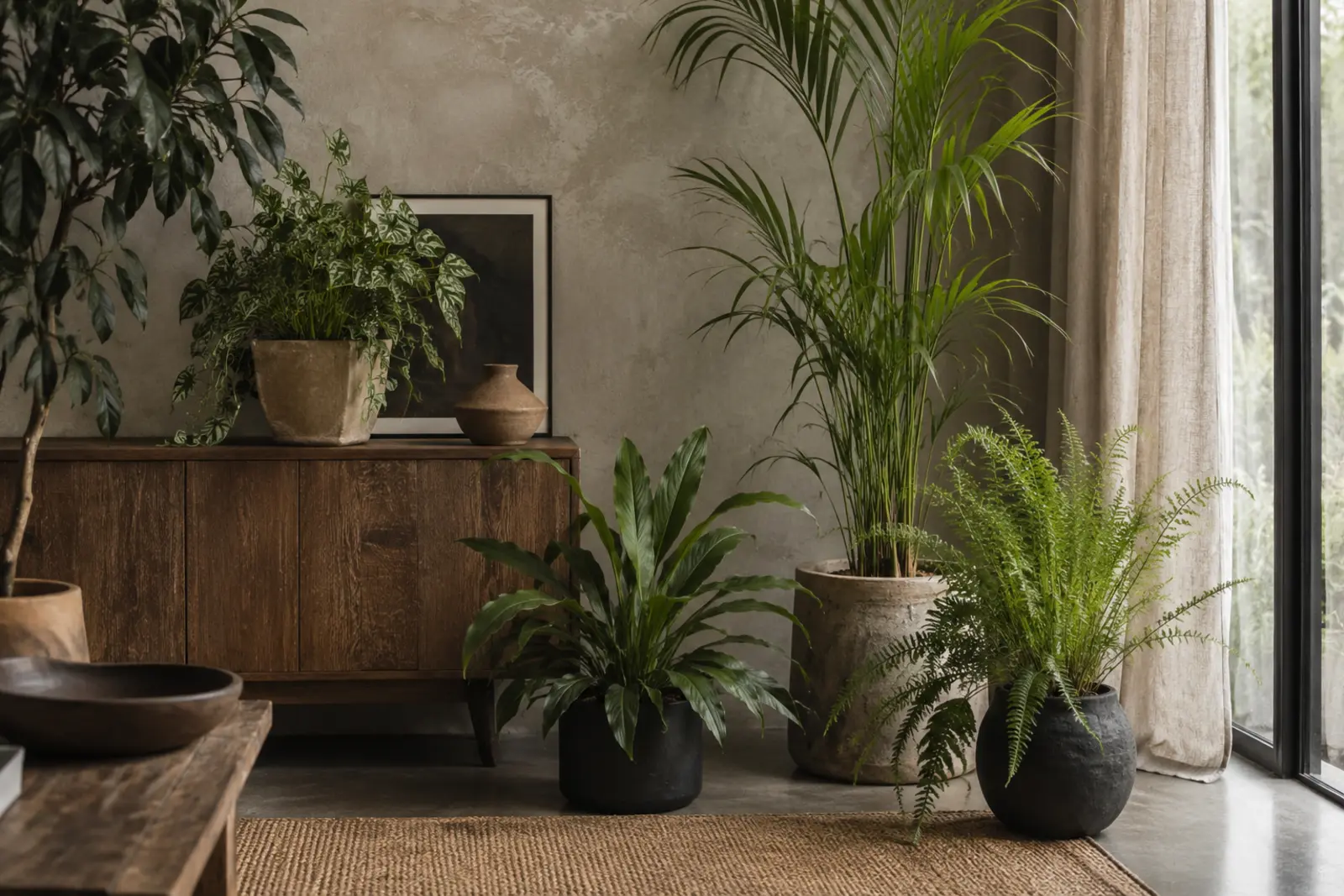
East, west, south, and north exposures tend to produce different timing and intensity, but obstructions can override the label.
Houseplant light guide
Indoor light depends on direction, distance, duration, glass, shade, and season. A bright-looking room can still provide weak growing light.
Change light gradually. A plant moved abruptly into strong direct sun can scorch even when the species can eventually tolerate more light.
What matters
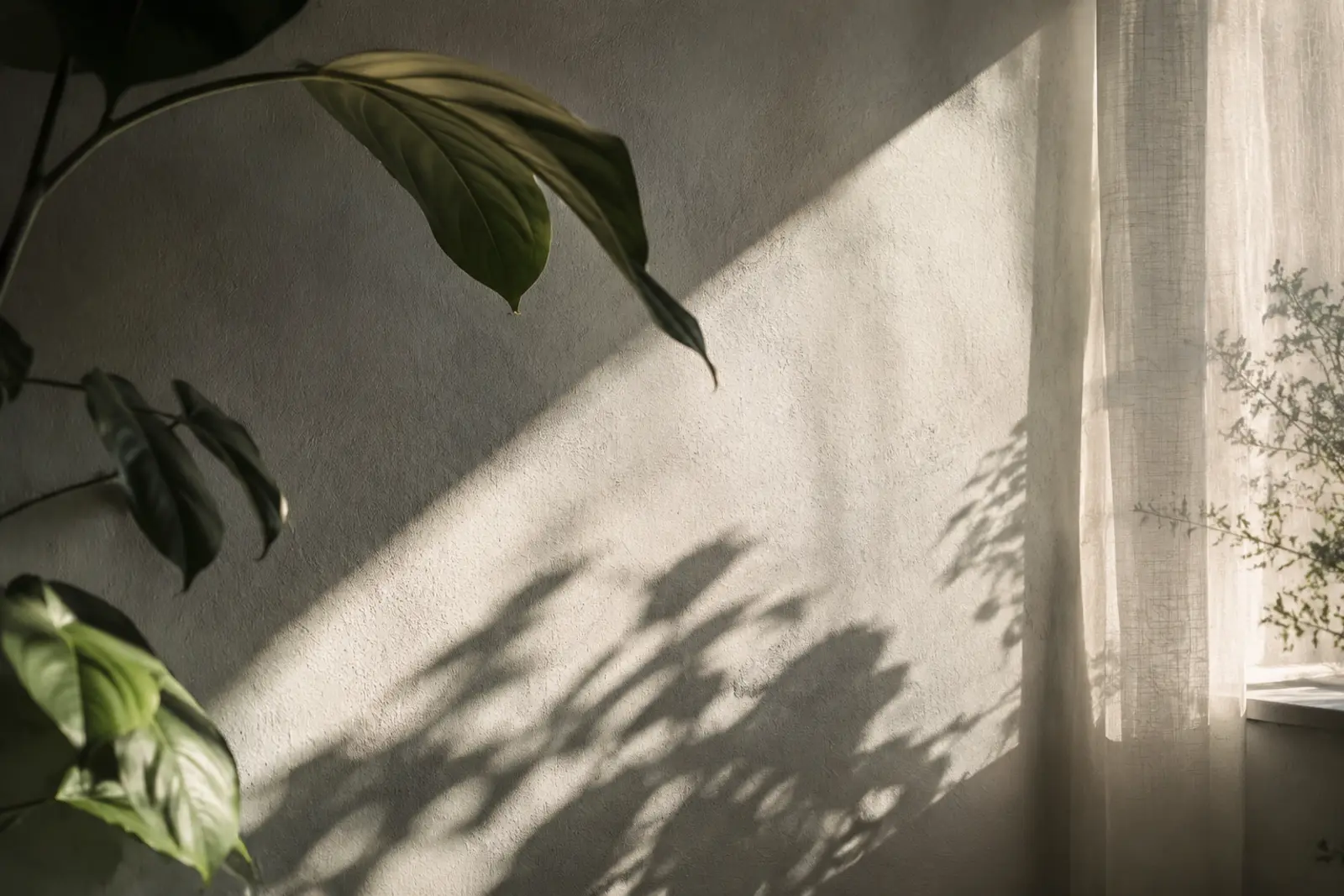
People experience a room with eyes that adjust constantly. Plants experience the energy arriving at their leaves. This is why everyday labels such as bright, indirect light are only a starting point. Two locations that sound identical may differ dramatically because one sits beside an unobstructed window and the other sits across the room behind curtains.
The practical goal is to describe light with better evidence and then watch the plant. Direction suggests when sun may arrive. Distance and obstructions affect intensity. Duration matters. Seasonal sun angle changes the pattern. New growth, leaf spacing, orientation, color, and water use provide feedback over time.
Key points
East, west, south, and north exposures tend to produce different timing and intensity, but obstructions can override the label.
Moving a plant farther from the glass can reduce useful light much more than the room’s appearance suggests.
Growth size, spacing, leaning, color, and moisture use can reveal whether the current placement is sustainable.
Window direction
In the Northern Hemisphere, east-facing windows often receive gentler morning sun, west-facing windows stronger afternoon sun, south-facing windows a longer and potentially more intense exposure, and north-facing windows steadier but lower light. That pattern changes with latitude, season, roof lines, balconies, trees, screens, tint, and neighboring buildings.
Stand where the plant will sit and look toward the sky. How much open sky is visible? Does direct sun reach the spot, or only the glass? Photographing the location at several times across a clear day creates a more useful record than a single glance.
Intensity & duration
A plant directly beside a window receives a much larger view of the bright outdoors than a plant several feet back. Light does not behave like a uniform wash across the room. Side walls, ceiling, furniture, and the viewing angle all change what reaches the foliage.
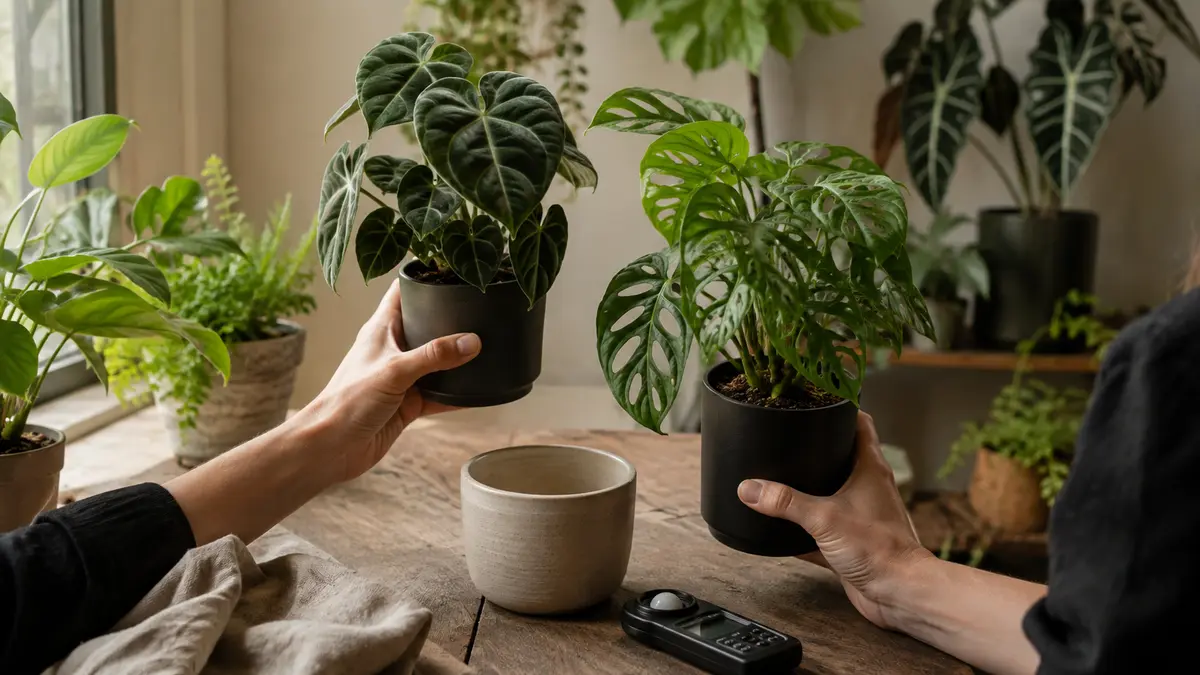
A handheld light meter or a reliable meter app can help compare placements, but a single reading is not a full light history. Take readings at consistent times and use them to compare rather than to chase one perfect number. Combine measurements with the plant’s response.
Plant response
Low light may show up as smaller new leaves, longer spaces between leaves, loss of compact form, leaning, slow drying, or limited growth. Excess light or an abrupt change may produce bleaching, scorched patches, curling, or unusually rapid drying. Some of these symptoms overlap with watering, roots, pests, and temperature stress, so look at the whole pattern.
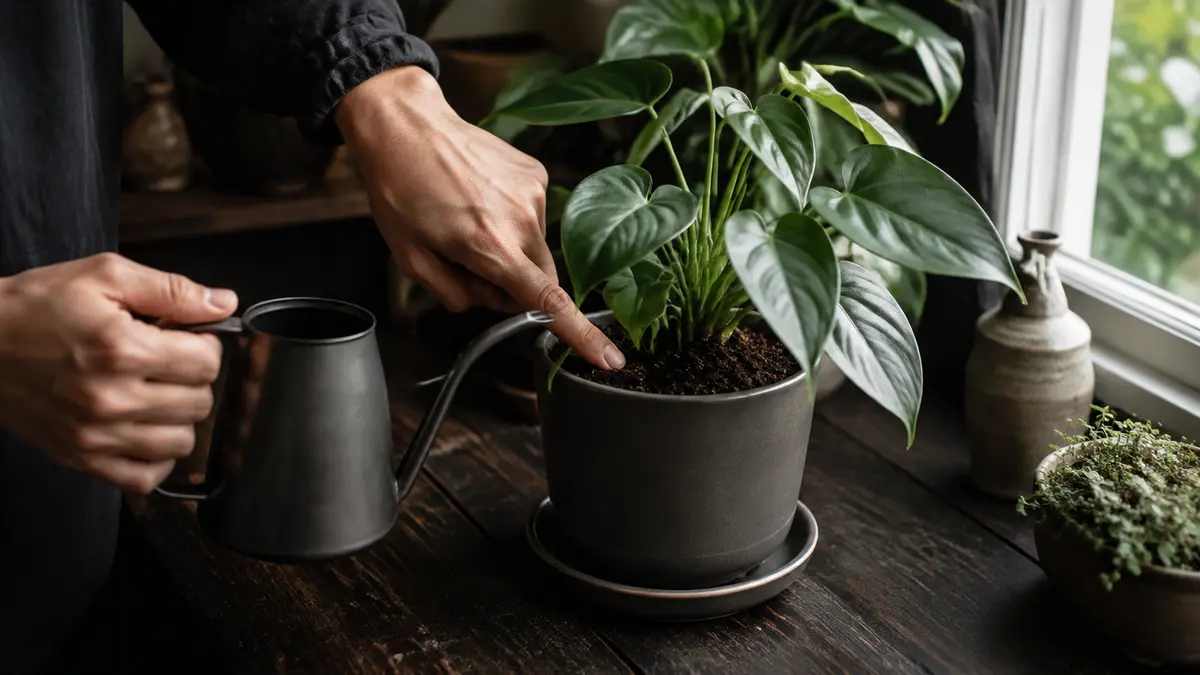
When increasing light, move in stages or use a sheer curtain during acclimation. Rotate only when even growth is desired; plants naturally orient toward light. If a plant remains in lower light, expect it to use water more slowly and adjust the watering process accordingly.
Rare Form recommends
Each product page explains why the item was selected, where it fits, where it does not, and what to check before following the affiliate link.
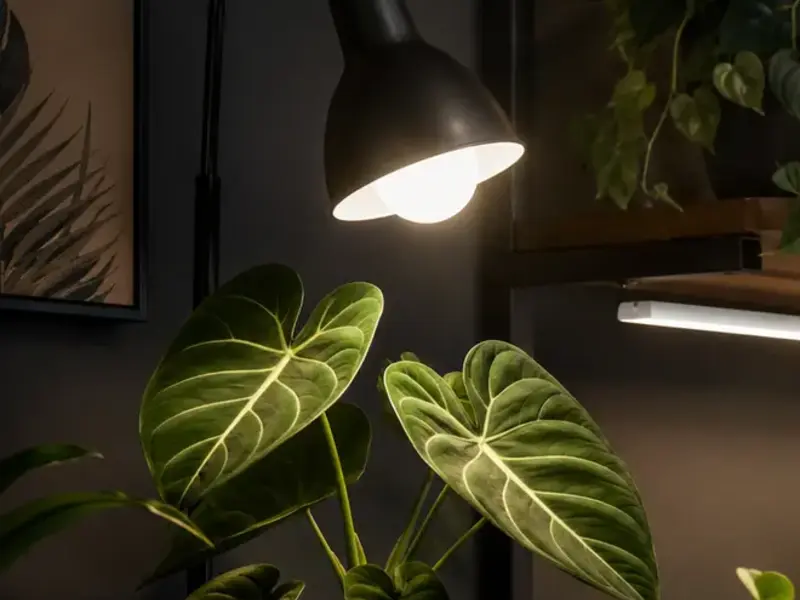
Briignite
White-appearing A19 LED grow bulbs with a standard E26 base, selected for adding plant light through an ordinary household-style fixture.
Why it made the shortlist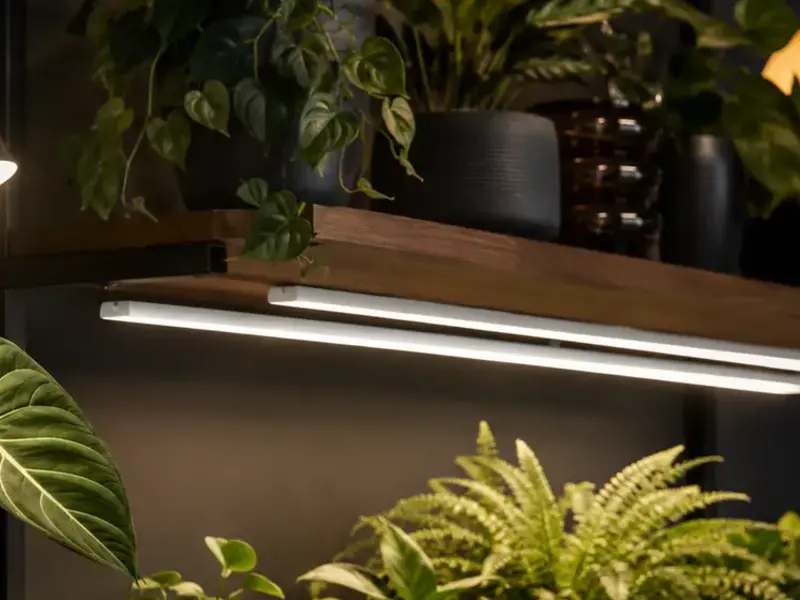
Barrina
Slim linkable LED grow-light bars for spreading supplemental light more evenly across plant shelves, propagation trays, or a longer grouping.
Why it made the shortlist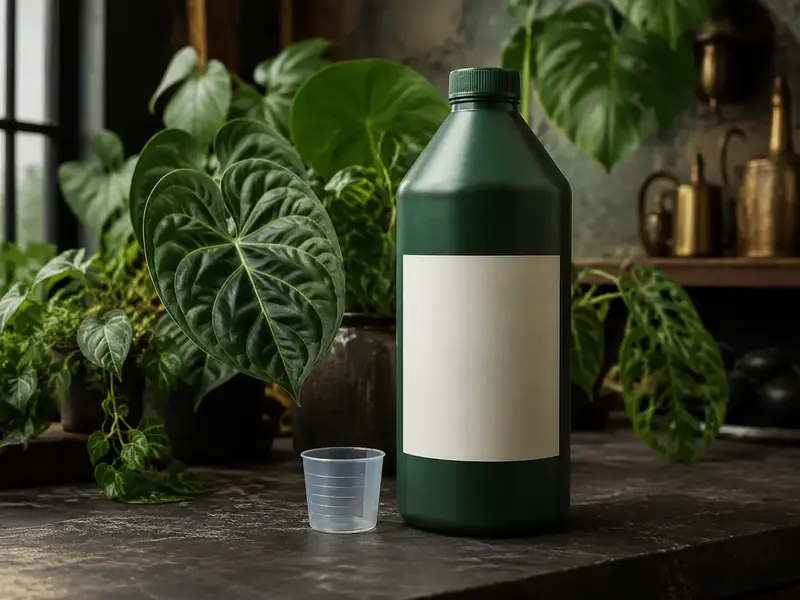
Growth Technology
A concentrated liquid nutrient selected for foliage-focused houseplants, tropical plants, aroids, ferns, and palms.
Why it made the shortlistNext steps
Confirm the window exposure and identify physical obstructions.
Record direct sun, open sky, and shadow at the leaf location.
Use photos or measurements to understand how distance changes the light.
Adjust gradually based on plant response, moisture use, and seasonal change.
Questions & answers
It generally describes strong ambient light without prolonged harsh sun directly on the leaves. The phrase is imprecise, so window direction, distance, obstructions, and hours of direct sun give a better picture.
Typical household lighting is designed for people and is often too weak or poorly positioned for meaningful plant growth. A purpose-selected grow light may help when intensity, spectrum, distance, and duration are appropriate.
The plant may have been acclimated to lower light and received a rapid increase in direct sun or heat. Increase exposure gradually and consider temporary filtering while new growth adapts.
Rotation can encourage more even growth, but not every plant needs a symmetrical form. Rotate gradually and avoid frequent major changes when a plant is already acclimating.
Contact Rare Form
Send wide room photographs, the window direction, plant-to-window distance, and several views taken across the day.