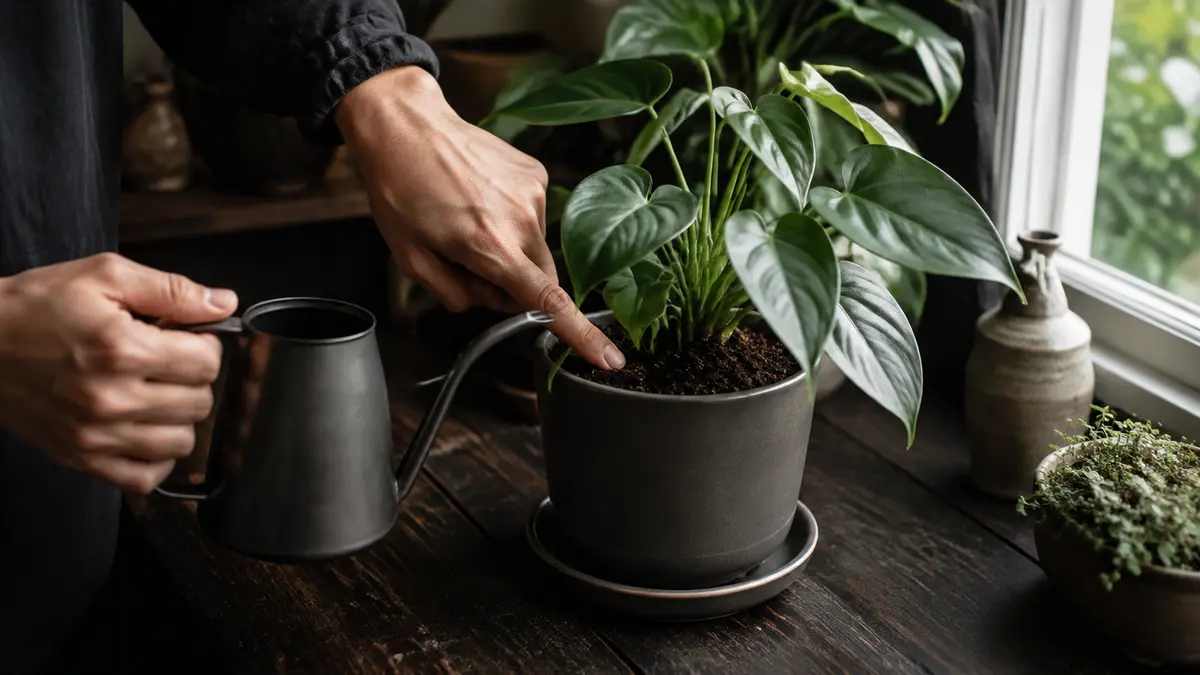
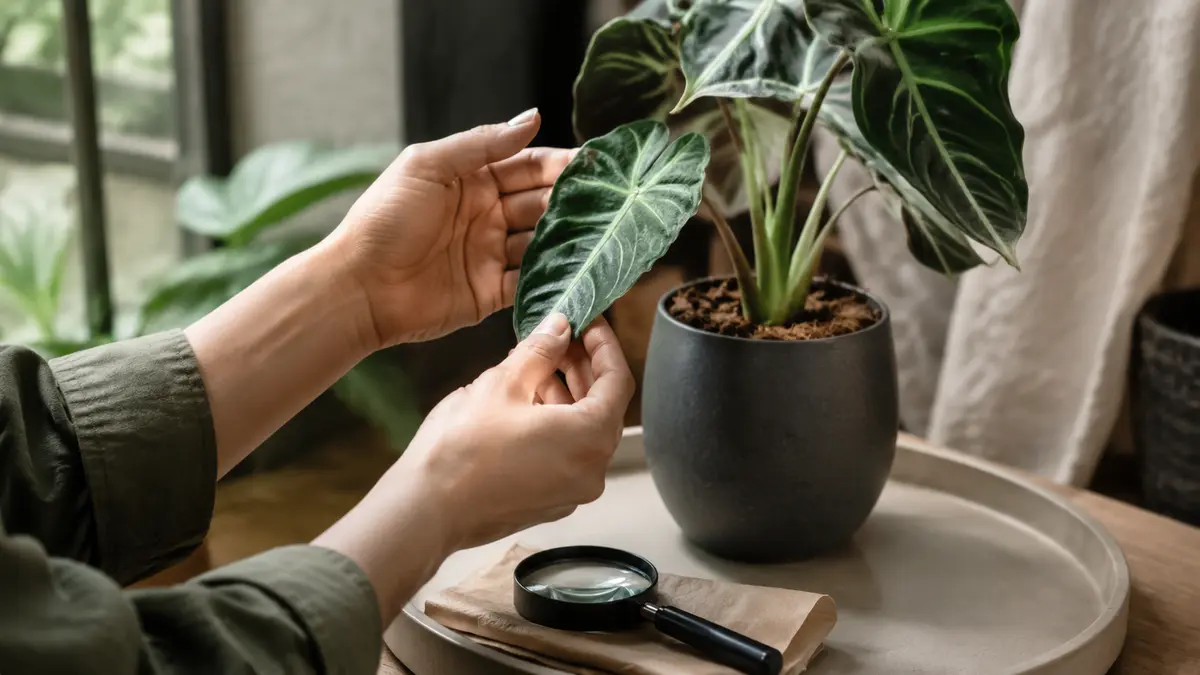
Find the reason
Root crowding, degraded medium, drainage, instability, and recovery are different problems with different solutions.
Houseplant repotting guide
Roots, medium, watering behavior, stability, and growth give better repotting evidence than a routine annual date.
A larger pot holds more wet medium around the existing roots. Increase size deliberately; bigger is not automatically safer.
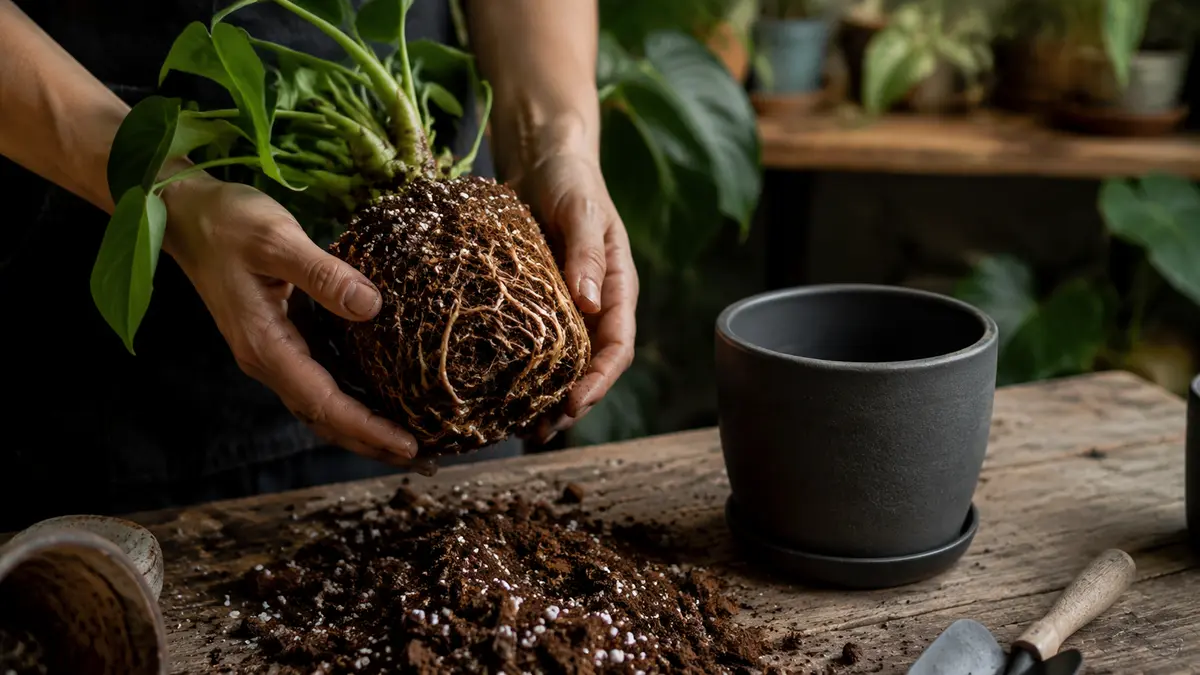
What matters
Repotting can solve a real constraint: a dense root mass, exhausted or collapsed medium, poor drainage, instability, a damaged container, or a mismatch between the plant and its current setup. It can also create unnecessary stress when done immediately after every purchase or used as the first response to any yellow leaf.
Begin by naming the reason. If the plant is healthy and the medium behaves well, a decorative outer pot may change the appearance without disturbing the roots. If the root system needs more room, a modest increase may be enough. If the medium is failing or roots are damaged, the priority may be structure and recovery rather than size.
Key points
Root crowding, degraded medium, drainage, instability, and recovery are different problems with different solutions.
A large jump can leave more wet medium than the roots can use, especially in lower light.
Prepare the pot and medium first, handle roots carefully, and avoid unnecessary disturbance.
Repotting signals
Roots visible at a drainage hole are not automatically an emergency. Some plants fill a pot comfortably. Stronger evidence includes a dense circling root mass, water passing through without wetting the root ball, very rapid drying despite appropriate conditions, halted growth during an active season, repeated instability, or medium that has collapsed and no longer drains or rehydrates well.
Repotting may also be needed when the container is damaged or when root problems require inspection. In that case, do not automatically increase the pot. Removing dead roots can leave a smaller healthy system that needs the same size or even a smaller container.
Pot & medium
Choose a container with functional drainage unless the plant is managed in a deliberate alternative system. The next pot should usually be only modestly wider than the healthy root mass. Material changes drying behavior: porous clay can dry more quickly, while glazed ceramic and plastic retain moisture longer.
Growing medium should balance moisture and air for the plant, roots, light, temperature, and watering habits. A chunky mix is not automatically correct for every species, and a moisture-retentive mix is not automatically bad. The structure should remain stable enough to support roots while allowing an appropriate wet-to-dry cycle.
After repotting
Set the plant at an appropriate depth and avoid packing the medium so tightly that air spaces disappear. Water according to the plant, root condition, and medium; not every newly repotted plant needs the same immediate treatment. Make sure excess water can leave and the plant is physically stable.
Return it to suitable light without introducing several other changes. Fertilizer is not a cure for transplant stress and may be unnecessary while roots settle. Watch moisture use, leaf posture, and new growth. Some pause can be normal, but continuing collapse, odor, or tissue loss deserves closer inspection.
Rare Form recommends
Each product page explains why the item was selected, where it fits, where it does not, and what to check before following the affiliate link.
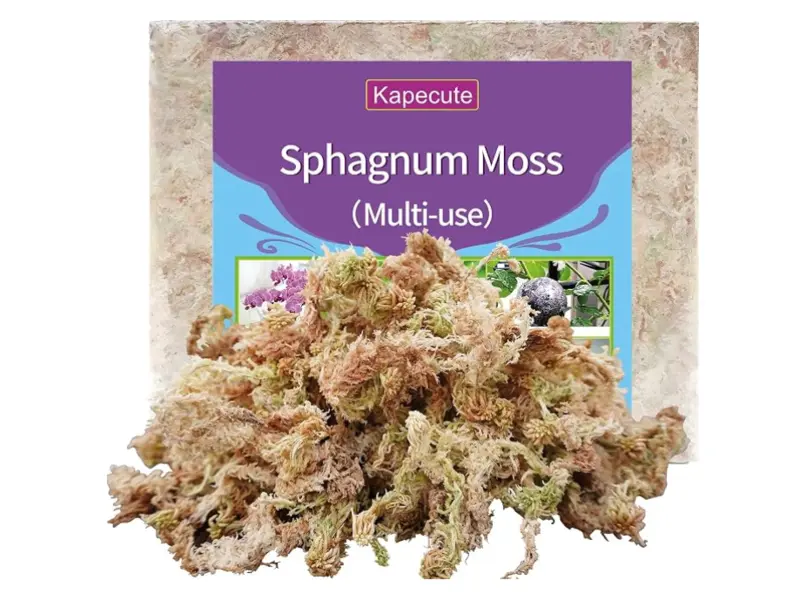
Kapecute
A bulk pack of dried sphagnum moss for filling moss poles, rooting projects, moisture-retentive mixes, and humidity-focused plant setups.
Why it made the shortlist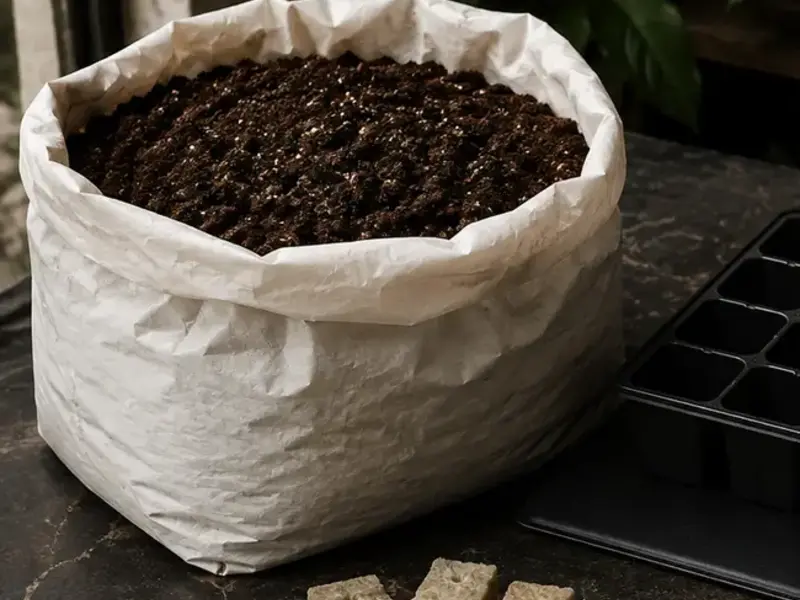
FoxFarm
A nutrient-rich, ready-to-use potting soil that gives many container plants a substantial base while allowing plant-specific drainage adjustments.
Why it made the shortlist
Bonide
Ready-to-use imidacloprid granules for listed pests on containerized household plants, for targeted use only when the pest and plant fit the current label.
Why it made the shortlistNext steps
Identify whether the issue is roots, medium, drainage, stability, damage, or visual presentation.
Use the functioning roots—not the old pot—to guide container size.
Have the new pot, medium, tools, support, and cleanup area ready.
Place carefully, water appropriately, return to suitable light, and observe the new pattern.
Best for
Questions & answers
Not automatically. Observe the plant, medium, roots when visible, and watering behavior. Immediate action makes sense when there is a clear problem; otherwise acclimation first can reduce simultaneous stress.
Choose a modest increase relative to the healthy root mass rather than the foliage. The right change varies, but very large jumps create more wet medium than roots may use efficiently.
Not by themselves. A few roots may explore drainage openings. Look at the density and function of the full root ball and whether watering or growth shows a real constraint.
Usually there is no need to treat fertilizer as first aid. Fresh medium may already contain nutrients, and disturbed roots benefit from stable conditions. Resume feeding according to active growth, plant needs, and the medium used.
Contact Rare Form
Share the plant, pot size, medium, light, watering behavior, and photographs of the whole plant, soil surface, drainage, and visible roots.